
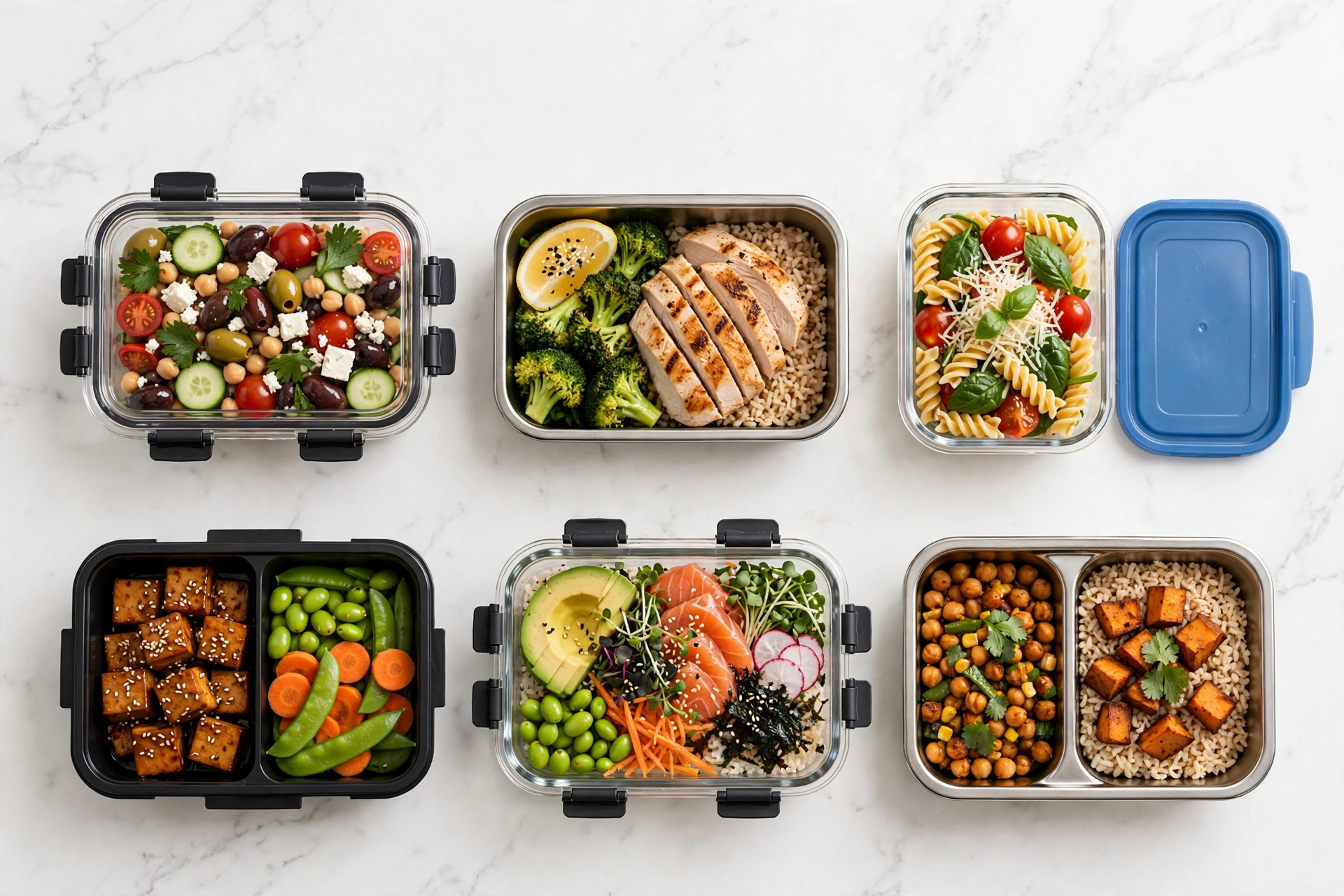
What Makes a Good Meal Prep Container?
Finding the best meal prep containers comes down to more than looks. Before the picks, here’s what I looked for: leak-proof seals, microwave and dishwasher safety, stackability, and portion sizes that match real meals (not tiny snack cups).
Most container failures come down to two things: material and lid design. Cheap plastic warps in the microwave and stains permanently after a few tomato-based meals, while flimsy lids pop open in a bag at the worst possible moment. Glass solves the staining problem but adds weight and breakage risk, while modern BPA-free plastics have closed much of that performance gap without the downsides. I also paid attention to real-world details that spec sheets skip — how loud the lids are when you’re trying to quietly reheat lunch at your desk, whether they nest for storage, and whether the sizes actually match how people eat (a lot of “meal prep” containers are sized for salads, not full dinners).
Table of Contents
Quick Picks
Best Overall: Rubbermaid Brilliance 20-Piece Food Storage Set
Best Glass Option: Pyrex Simply Store 18-Piece Glass Set
Best for Portion Control: Bentgo Prep 5-Compartment Meal Prep Containers
Best Budget Option: Rubbermaid TakeAlongs 40-Piece Set
Best for Freezer Storage: Souper Cubes Silicone Freezer Tray
Best Durable Option: PlanetBox Stainless Steel Bento Box
| Product | Material | Leak-Proof | Microwave Safe | Dishwasher Safe | Freezer Safe | Best For |
| Rubbermaid Brilliance | Plastic | yes | yes | yes | yes | Overall |
| Pyrex Simply Store | Glass | yes | yes | yes | yes | No Staining |
| Bentgo Prep | Plastic | Partial | yes | yes | No | Portion Control |
| Rubbermaid TakeAlongs | Plastic | No | yes | yes | No | Budget |
| Souper Cubes | Silicone | yes | yes | yes | yes | Freezer Storage |
| Planet Box | Stainless Steel | yes | No | yes | No | Durability |
Best Overall
We evaluated leading meal prep containers based on durability, leak resistance, material quality, ease of cleaning, and overall value to help you compare the best options.
Whether you’re feeding one person or prepping for a family of four, the best meal prep containers should disappear into your routine instead of adding friction — no cracked lids, no mystery stains, no containers that only fit in the fridge if you remove a shelf.
Pyrex Simply Store 18-Piece Glass Set
If plastic staining and lingering smells drive you crazy, this is the fix. Glass containers won’t hold onto tomato sauce stains or curry smells the way plastic does, and they go straight from fridge to oven without a second thought. The snap-tight lids keep things leak-proof in transit, and the tempered glass shrugs off years of daily use. The only tradeoff: they’re heavier, so skip these if you’re hauling lunch across town every day.
Bentgo Prep 5-Compartment Meal Prep Container
Built for exactly one thing: keeping your macros honest. Five built-in compartments mean your protein, carbs, and veggies stay separated instead of turning into a mixed pile by lunchtime, which makes portioning meals for the week almost automatic. They’re microwave-safe, stack cleanly in the fridge, and hold up well through repeated washes. For high-protein meal preppers measuring things out daily, this is the set that removes the guesswork.
Rubbermaid Brilliance Food Storage Set
This set consistently wins for its crystal-clear lids, leak-proof latching, and stackable design — no more mismatched lids taking over your cabinet.
Best Budget Option
Rubbermaid Take Alongs 40-Piece Set
Not everyone needs premium features — sometimes you just need reliable containers that won’t fall apart after a month of daily use. This set delivers exactly that. The lids snap on securely without turning into a wrestling match, they stack neatly in a cabinet without toppling, and at this price point you can afford to lose one or two in the office fridge without feeling it. They’re not leak-proof enough for soupy meals, but for solid foods — rice bowls, roasted veggies, sandwiches — they hold up well wash after wash. If you’re just starting your meal prep habit and don’t want to commit real money yet, this is where to begin.
Best for Freezer Storage
Souper Cubes Silicone Freezer Tray
If you batch-cook soups, sauces, or stews, this solves a problem regular containers can’t: freezing food in usable, stackable portions. Each cube freezes into a solid block you can pop out and store in a bag, so you’re not tying up containers in the freezer for weeks at a time. Silicone flexes enough to release frozen food easily without cracking, and it’s oven, microwave, and dishwasher safe. The tradeoff is these aren’t meant for daily fridge use — they’re a freezer-specific tool, not an everyday container.
Best Durable Option
PlanetBox Stainless Steel Bento Box
For anyone who’s tired of replacing cracked plastic containers every few months, stainless steel is the end of that cycle. This one won’t stain, warp, hold onto smells, or crack from a drop onto tile. The compartments keep foods separate without needing extra containers, and it’s built to last years, not months. It’s pricier upfront and not microwave-safe (a real tradeoff for reheating fans), but for durability alone, nothing here beats it.
Final Thoughts
The right container won’t fix a bad recipe, but the wrong one can absolutely ruin a good one — soggy lids, warped plastic, and containers that don’t stack just make meal prep feel like a chore. Any of the picks above will hold up to weekly use, but if you’re just getting your meal prep system started, grab a set that matches your priorities (leak-proof, glass, or portion control) and build from there.
Want a done-for-you weekly plan to go with your new containers? Grab my free 7-Day High-Protein Meal Prep Plan — it’s got the exact recipes and portions to fill them with.
Buying Guide: How to Choose the Right Meal Prep Container
Glass vs. Plastic
Glass wins on longevity and food safety — it won’t stain, warp, or absorb smells, and it goes from fridge to oven without a second thought. The tradeoff is weight and breakage risk, which matters if you’re carrying lunch in a bag daily or prepping for kids. Plastic is lighter, cheaper, and more forgiving if dropped, but even the good stuff will eventually stain from tomato sauce or turmeric.
Buying tip: if you reheat food often, go glass. If you’re prepping for a lunch bag or a toddler, go plastic.
BPA-Free Plastics
Not all plastic is created equal. Older or cheap containers can use plastics that degrade and leach chemicals with repeated heating. Look for containers explicitly labeled BPA-free, since the FDA considers currently approved BPA use in food containers safe at typical exposure levels, but many buyers still prefer to avoid it where alternatives exist.
Microwave Safety
“Microwave-safe” doesn’t mean identical performance across brands. Some plastics get uncomfortably hot to the touch, while others (and all glass) stay cool on the outside. If you’re reheating daily at a desk or shared kitchen, this small detail matters more than it seems.
Buying tip: test a new container on a short 30-second reheat first, before committing to a full lunch in it.
Dishwasher Safety
Top-rack dishwasher-safe is common, but lids are usually the weak point — they can warp or lose their seal after repeated heat cycles. If a set specifically says lids are dishwasher-safe (not just the base), that’s a good sign of better hardware.
Buying tip: hand-wash lids occasionally even if they’re rated dishwasher-safe, to extend their seal life.
Freezer Storage
Not every container that says “freezer-safe” performs the same. Rigid plastic and glass can crack from expansion if overfilled, while silicone flexes and holds up better to repeated freeze-thaw cycles. If you batch-cook soups or sauces, a flexible freezer-specific option is worth having alongside your everyday containers.
Buying tip: leave at least half an inch of headspace in any container before freezing liquids, regardless of the material.
Leak-Proof Lids
This is where cheap containers fail first. Snap-lock or hinged-latch lids generally outperform simple snap-on lids for anything liquid — soups, dressings, marinated foods. If a product page doesn’t mention leak-proof testing or silicone gaskets, assume it’s fine for solids only.
Buying tip: if you’re unsure, do a shake test with water over a sink before trusting a new container with your lunch.
Size and Capacity
A lot of “meal prep” containers are sized for salads, not full dinners. If you’re prepping actual meals — protein, carb, veggie — look for containers in the 30–40 oz range rather than smaller 20 oz salad-style boxes.
Buying tip: measure a typical plate of food you’d actually eat before assuming a container size will work.
Compartments vs. Single Compartment
Compartments keep foods separate and make portion control almost automatic, which is useful for macro tracking or picky eaters. Single-compartment containers are more flexible for saucy or mixed dishes (stews, casseroles, grain bowls) where separation doesn’t matter.
Buying tip: if you’re tracking protein/carbs/veggies daily, go compartments. If you cook mostly one-pot meals, single-compartment is more practical.
Stackability and Storage
Mismatched containers that don’t stack are one of the biggest hidden time-wasters in a kitchen — they take up more fridge space and make cabinets messy. Sets designed to nest or stack save real space, especially in smaller kitchens.
Buying tip: buy a full matching set instead of mixing brands, even if it costs slightly more — the space savings add up.
Which Type Is Best for Different Users
The best meal prep containers for you depend entirely on your routine, so match your pick to how you’ll actually use it:
- Office workers: lightweight, stackable plastic sets that survive a bag and a microwave — prioritize convenience over premium materials.
- Families: durable, dishwasher-safe plastic in larger sizes; glass works too if kids aren’t handling containers directly.
- Fitness and macro trackers: compartment-style containers for consistent portioning, paired with a couple of freezer-safe options for batch cooking.
- Serious meal preppers: a mixed set — glass for daily use, a budget plastic set for backup, and freezer-safe silicone for batch-cooked meals.
There’s no single “best” container — just the right one for how you actually cook and eat. With the categories above in mind, here are the questions we get asked most often about meal prep containers.
FAQ
How many meal prep containers do I actually need?
For one person prepping 5 days a week, 6–8 containers is a practical starting point — enough to cover a workweek without needing to wash dishes mid-week. Families or bulk preppers often need double that. Buying a few extra of the best meal prep containers you own also gives you backup on wash day.
Are glass or plastic containers better for meal prep?
Neither is universally better — glass holds up longer and won’t stain, while plastic is lighter and more travel-friendly. Many people end up using both: glass at home, plastic for on-the-go meals.
Can I put hot food directly into meal prep containers?
Glass and most BPA-free plastics can handle hot food, but it’s best to let food cool slightly first — extreme heat can warp cheaper plastics over time and creates unnecessary condensation inside sealed containers.
How long do meal prep containers last in the fridge?
Most cooked meals stay safe for 3–4 days in the fridge when stored in a proper airtight container. Leak-proof seals matter here — a loose lid speeds up spoilage and lets odors transfer between containers.
Is it safe to freeze food in the same containers I use in the fridge?
Only if they’re labeled freezer-safe. Rigid plastic and glass can crack from expansion, so leave headspace for liquids, or use a flexible, freezer-specific container like a silicone tray for anything you plan to freeze.
Do compartment containers help with portion control?
Yes — compartments naturally cap how much of each food group fits in, which makes it easier to stay consistent with portions without measuring every time.